You may have heard that California now clears old criminal records automatically. You may have even been told that you no longer need to do anything, that the state takes care of it, and that your record is already clean.
Some of that is true. Most of it is not.
California does grant automatic record relief. It happens every month, without a petition, and hundreds of thousands of people have received it. But automatic relief is not a dismissal. It does not remove the conviction from your record. The Department of Justice will not tell you whether you received it. And if the state's electronic records are missing information about your case, which happens far more often than people realize, the relief simply never gets granted.
This post explains what the Clean Slate laws actually do, who they reach, what they leave behind, and why the difference matters if you are trying to get a job, a professional license, or a fresh start in Fresno County.
Automatic record relief did not arrive all at once. It was built in pieces over several years, and the dates matter because they determine which cases the system reaches.
The mechanics are the same in every version. Each month, the Department of Justice reviews its databases, identifies records that qualify, adds a notation next to the arrest or conviction stating that relief has been granted, and sends an electronic notice to the superior court with jurisdiction over the case.
Notice what is missing from that list. Nobody files anything. No judge reviews your case. No one reads your file. And no one contacts you.
Eligibility for arrests is set out in Penal Code section 851.93, and eligibility for convictions is set out in Penal Code section 1203.425. In general terms, the categories look like this.
Arrests that never became convictions. If charges were never filed and the filing period has passed, if charges were filed and then dismissed, or if you were acquitted, the arrest generally qualifies. Most felony arrests where no charges were ever filed qualify three years after the arrest date.
Misdemeanor and infraction convictions. These generally qualify once you have completed your sentence and any term of probation.
Felony convictions with probation. These generally qualify upon successful completion of probation, provided you are not currently charged with an offense or serving another sentence.
Felony convictions with a jail or prison term. SB 731 opened this category. These generally qualify if the offense was not a serious felony under Penal Code section 1192.7, not a violent felony under Penal Code section 667.5, and does not require sex offender registration, and if you completed your sentence and all supervision more than four years ago without a new felony conviction.
Two disqualifiers apply across the board. You are not eligible if you are required to register under the Sex Offender Registration Act, and you are not eligible while you have an active record of local, state, or federal supervision.
This is the section worth reading twice, because this is where nearly everyone is misinformed.
It is not a dismissal. The Department of Justice says so in plain language on its own website. Automatic record relief is not a dismissal, sealing, or expungement of your state criminal history record. The arrest or conviction remains on the record. What changes is that a notation of relief is added next to it, and that notation is what the Department uses to decide whether the record gets released to employers and agencies. The Department has also told the courts directly that convictions cannot be dismissed on the basis of the automatic relief lists.
It only works if the state's data is complete. Relief is automatic only if the relevant information is present in the Department's electronic records. The Department is reviewing millions of records every month, reaching back to 1973, across five decades of changing reporting standards. Missing dispositions are common. If your case has a gap, no notation gets added, and nothing happens.
Nobody tells you. The Department does not notify individuals that relief was granted. It notifies the courts only. Unless you request your own record, you have no way of knowing where you stand.
Some employers still see it. Certain background checks still receive the record even after relief. Agencies requesting records for peace officer employment and agencies performing an education function are two examples where the arrest or conviction is still disclosed, along with the notation.
Private background check companies are outside the system entirely. Commercial background check services are not affiliated with the Department of Justice and do not access its records. They build their own databases, often from court records collected years ago. A notation added to a state file in 2026 does not reach into a private vendor's database that was populated in 2018.
It does not restore your firearm rights. Relief under these sections does not give you the right to own, purchase, or possess a firearm or ammunition if a conviction otherwise prohibits it.
It does not end your duty to disclose. You must still disclose the conviction when applying for public office, for a position as a peace officer, and on applications for licensure by a state or local agency. If you are applying to become a nurse, a teacher, a contractor, a real estate agent, or a security guard, this matters enormously. Failing to disclose is often a bigger problem than the underlying conviction.
It does not lift a protective order. Record relief does not release you from the terms of an unexpired criminal protective order.
It does not help in immigration court. Federal immigration authorities do not treat California rehabilitative relief as erasing a conviction. If immigration consequences are your concern, automatic relief accomplishes nothing for you, and you should be looking at a motion to vacate under Penal Code section 1473.7 instead.
When the Department of Justice grants relief, it notifies the superior court, and the court is then required to limit public access to the case. The non-disclosure obligation covers cases granted relief under sections 851.93, 1203.4, 1203.4a, 1203.41, 1203.42, and 1203.425. That means a dismissal you obtain by petition triggers the same protection.
What we see in practice in Fresno County is less uniform than the statute suggests. When a case is sealed, the court generally removes it from the public index and it is no longer viewable. Some DUI cases are removed as well. But we regularly see cases that received a dismissal under Penal Code section 1203.4 that are still sitting in the public record, visible to anyone who looks.
That gap is the whole point. The law tells the court what it must do. It does not guarantee that it happened in your case, and no one is going to check for you.
Stop guessing. There is a straightforward way to see your own record.
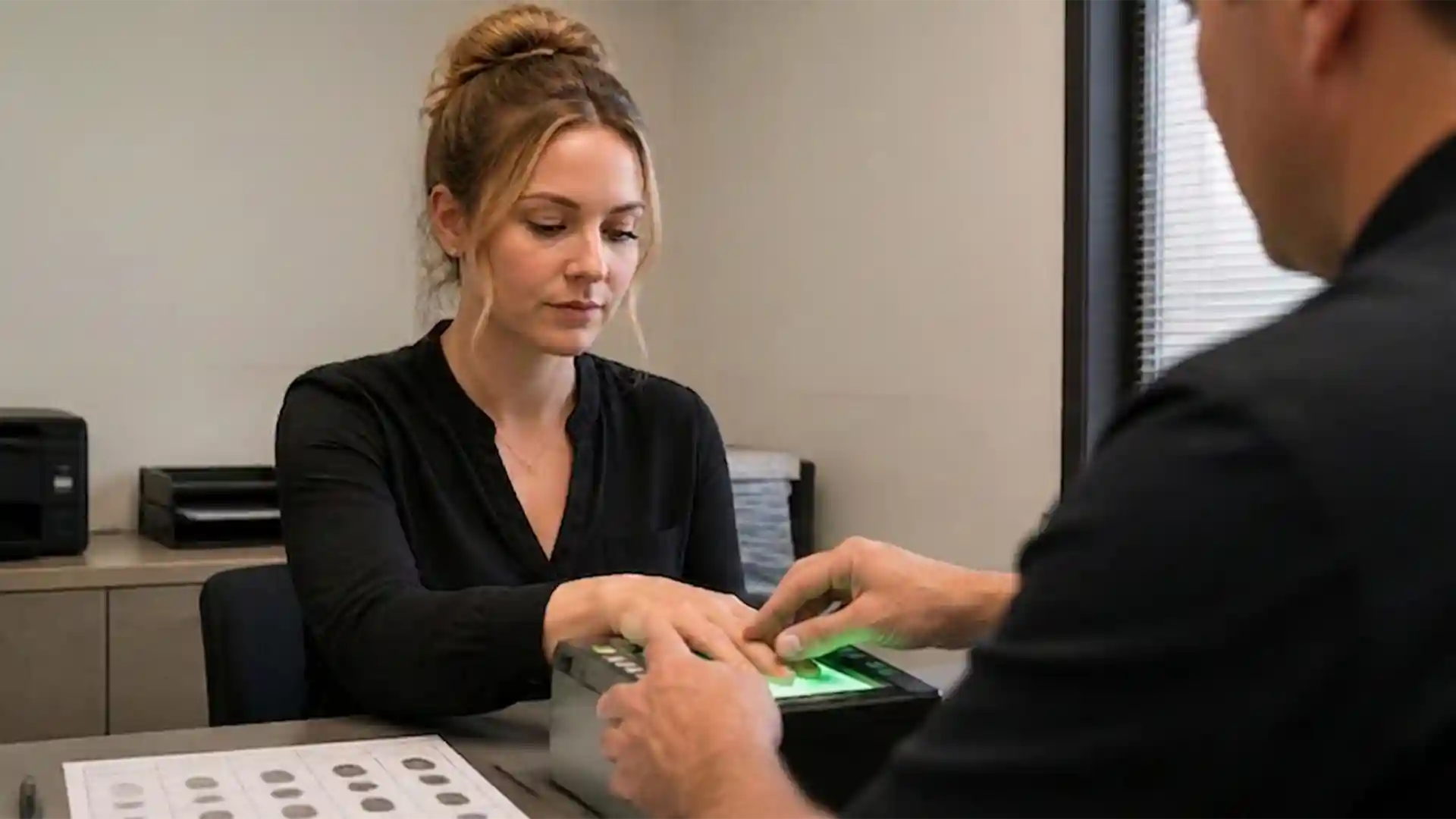
You can request your own state summary criminal history information directly from the California Department of Justice through its record review process. It requires a live scan and a fee, and a fee waiver is available if you cannot afford it.
When the record arrives, look for two different things. A notation stating that relief was granted under section 851.93 or 1203.425 means the automatic system reached your case. The absence of that notation, on a case you believe should qualify, usually means the state's data is incomplete. If you believe your record contains an error, the Department provides a form for claiming inaccuracy or incompleteness, which comes with your record.
A separate step is checking what the Fresno County Superior Court's public record still shows, because as noted above, the two do not always match.
The Department of Justice makes the point better than we could. If you want a dismissal, a sealing, a reduction of charges, or a resentencing, you must file a petition with the court or the arresting agency. Automatic relief does none of those things.
A petition gets you what automatic relief cannot:
If your case is old, if it came out of a court that reported records on paper, if it involves a felony that was later reduced, or if the disposition was ever entered incorrectly, the automatic system is the least likely thing to help you.
Automatic record relief is a genuine improvement in California law, and for a large number of people it quietly does exactly what it was meant to do. But it is not a dismissal, it is not confirmed, it is not communicated, and it is not complete. If you are counting on it, the first thing to do is find out whether it actually happened. The second is to decide whether a notation is enough, or whether you need a court order that says your case was dismissed.
If you have a case in Fresno or Madera County and you want to know exactly what your record shows and what relief you qualify for, contact us or book a free consultation. We will review your record, tell you where you stand, and file what needs to be filed so you can clear your criminal record.
Take a deeper Dive

At the Law Offices of Tina M. Barberi, PC, we are dedicated in providing you a strong defense in your case. Our proactive approach ensures personalized and effective legal solutions.