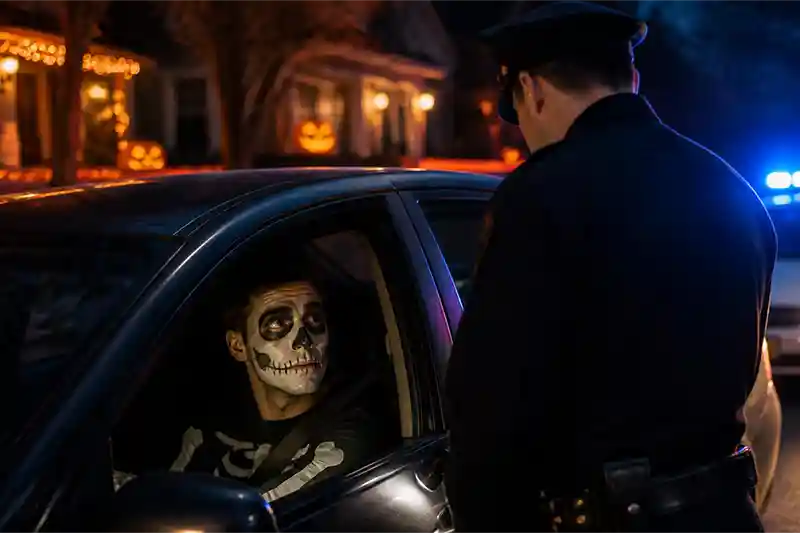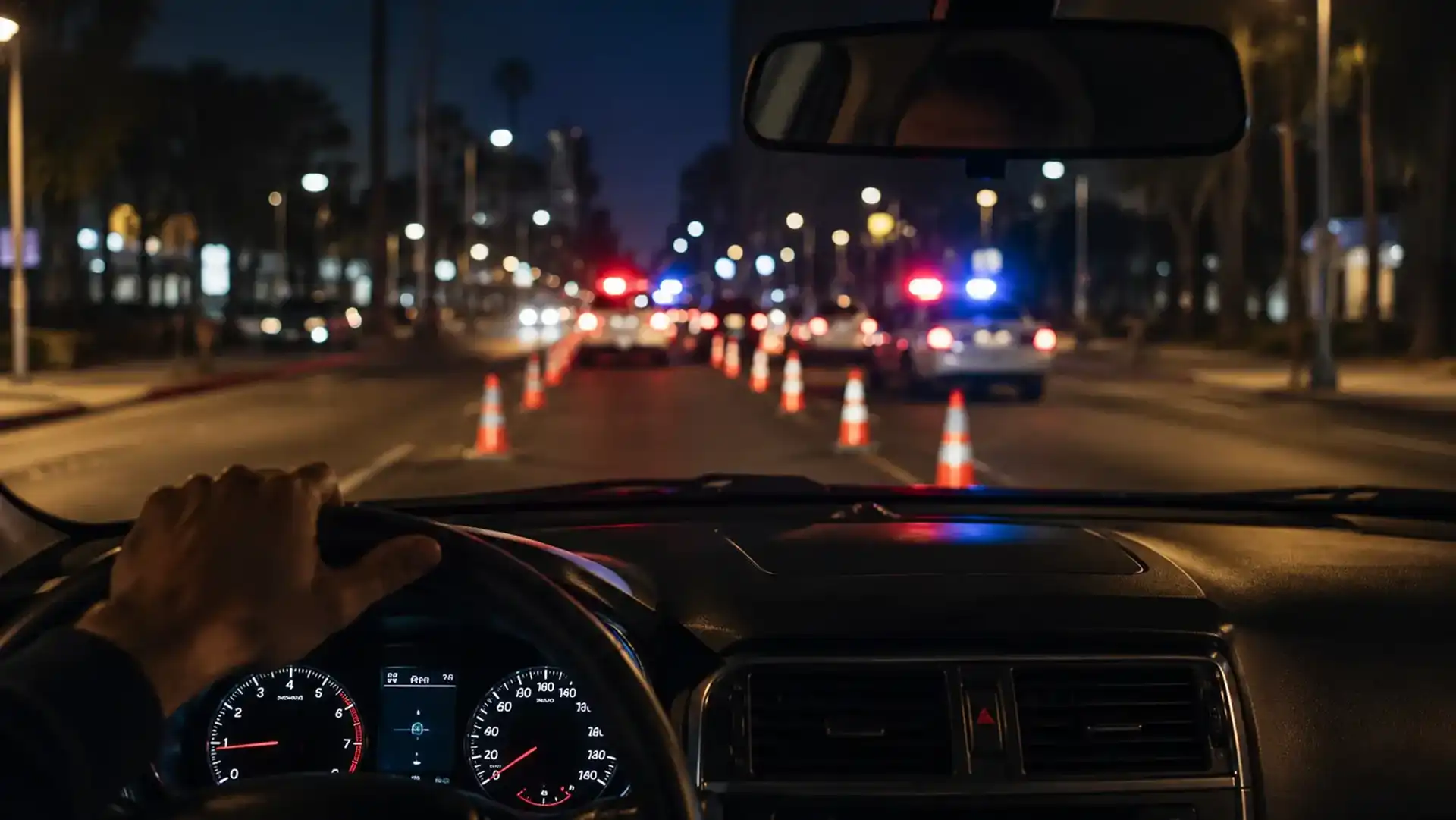
If you drive in Fresno, DUI checkpoints are something you should be prepared for, especially on weekends, holidays, and major enforcement nights. Fresno police have conducted multiple DUI enforcement operations in 2026, including a checkpoint at First Street and Tulare Avenue on Saturday, May 30, 2026, from 9 p.m. to 3 a.m. During that checkpoint, officers contacted 276 vehicles, arrested four drivers on suspicion of DUI, and cited 32 drivers for license-related violations. Fresno police have also announced another checkpoint for June 13, 2026.
This article is written for Fresno and Central Valley drivers who may encounter a DUI checkpoint on a local roadway. It explains what may happen during a checkpoint stop, what documents drivers must provide, and which roadside requests may be voluntary. The stakes are very real. A first time DUI in California carries an average of about $13,500 in fines and penalties, and that figure does not include attorney fees, towing costs, lost wages, or the insurance increases that can follow you for years.
This article walks through exactly what to expect at a checkpoint, what the law requires of you, and just as importantly, what it does not.
Checkpoint locations are not chosen at random. Fresno PD selects locations based on where impaired driving crashes have actually occurred. If an intersection keeps appearing in crash reports, it becomes a candidate for a checkpoint.
The funding for these operations comes from grants issued by the California Office of Traffic Safety through the National Highway Traffic Safety Administration. That detail matters for one simple reason. This is a funded, ongoing program, and these checkpoints are not going away. If anything, you should expect more of them around holidays and major weekends.
Here is something many drivers do not know. Advance publicity is one of the safeguards California courts consider when evaluating whether a sobriety checkpoint was conducted lawfully, under guidelines the California Supreme Court set out in Ingersoll v. Palmer. Fresno PD typically issues press releases, and local outlets such as GV Wire and YourCentralValley.com consistently report upcoming checkpoint dates. The exact intersection is not always disclosed ahead of time, but the date usually is. If you want advance notice before a weekend out, those two sites are worth checking.
Let us start with the requirements, because getting these wrong creates problems you did not need to have.
You must stop once directed. Checkpoint stops are legal in California. Once you are in the checkpoint line and an officer directs you to stop, you should stop and follow lawful instructions. Driving through one without stopping will turn a routine 30-second interaction into a very serious situation. However, if you see a checkpoint ahead and can avoid it with a legal turn before entering it, that alone should not give police a basis to stop you. More on that below.
You must provide three things if asked: your driver license, your vehicle registration, and proof of insurance. Keep them somewhere you can reach easily. Digging through a glovebox while an officer watches is not the position you want to be in.
You must not lie. Lying to an officer can create separate legal trouble. However, there is an important difference between lying and simply choosing not to volunteer information.
You are not required to answer questions such as "Where are you coming from?" or "Have you had anything to drink tonight?" You may politely decline. Saying something like "I am choosing to remain silent. I do not want to answer questions." is a complete and lawful response. Say it calmly, hand over your documents, and leave it at that. Be aware that remaining silent does not mean you can refuse a chemical test after a lawful DUI arrest, which is covered below. Short and calm answers serve you well in this situation, while nervous over explaining is often how people talk themselves into trouble.
This is the section worth reading twice, because this is where most people get it wrong. The rules change completely depending on one thing: whether you have been arrested yet.
Field sobriety tests. The walk and turn, the one leg stand, and the eye tracking test that officers call the HGN test are all voluntary in California before an arrest. Officers will not usually announce that. They will often ask you to step out of the vehicle and begin the tests as if participation were automatic, but it is not. These tests are designed to gather evidence against you, they are graded subjectively by the officer administering them, and many completely sober people perform poorly on them because of nerves, footwear, uneven pavement, or a medical condition. You may decline them politely.
The roadside handheld breath test. This device is called the Preliminary Alcohol Screening test, or PAS, and it is the small machine officers ask you to blow into at the side of the road. For most drivers who are 21 or older and not on DUI probation, this test is voluntary before arrest, and officers are not in the habit of advertising that. The exceptions are important, though. Drivers under 21 and drivers on DUI probation are treated differently under California law and may face license consequences for refusing a PAS test.
Chemical testing. Once you are actually placed under arrest for DUI, everything changes. California's implied consent law applies at that point. By holding a California driver license, you have already agreed to submit to a chemical test of your blood or breath if you are lawfully arrested for DUI. This requirement is not optional.
Refusing a chemical test after arrest can trigger a one year license suspension from the DMV for a first offense. That suspension is separate from, and in addition to, whatever happens in your criminal case. A refusal finding can also make restricted-license options much more limited, and many drivers facing a refusal suspension may have no work-restricted license available. The refusal can also be used against you in court, and it increases your sentencing exposure if you are convicted.
The short version is this: roadside tests before arrest are voluntary for most drivers, while the chemical test after arrest is mandatory. Confusing those two rules is one of the most costly mistakes people make at checkpoints.
If you are arrested, here is the sequence of events, along with the one deadline you absolutely cannot afford to miss.
First, the officer reads you what is called the implied consent admonition, which is a formal warning explaining that you must take a chemical test and what happens if you refuse.
Then you choose between a blood test and a breath test. One practical note is worth knowing here. Breath results are available immediately, while blood results take longer to come back. However, blood samples are preserved, which can give your attorney more to work with later, including the option of independent retesting.
Your vehicle will likely be towed and impounded at your expense, and the storage fees increase by the day.
The officer will take your physical license and hand you a pink piece of paper. That pink slip is a temporary license, and it is only valid for 30 days.
Now for the deadline that matters most. You generally have only 10 days from receiving the suspension or revocation order, usually the date of arrest, to request a DMV Administrative Per Se hearing. That means ten calendar days, not ten days from whenever you feel ready to deal with it. If you do not request that hearing, your license suspension goes through automatically, with no review and no opportunity to contest it. The DMV process is completely separate from your criminal court case and moves on its own schedule. Drivers can lose their licenses simply because they miss the 10 day deadline.
The same mistakes appear again and again in checkpoint cases:
Many people assume that once they are arrested, the outcome is already decided. In reality, checkpoint cases have specific and concrete pressure points that an experienced attorney knows how to examine.
Reviewing the checkpoint itself. Checkpoints are only legal when they follow strict requirements, including proper advance notice, visible signage and lighting, a neutral formula for which vehicles are stopped (every car or every third car, rather than officer discretion), and supervisory officers making the operational decisions. If the checkpoint cut corners, the evidence from your stop may be suppressed.
Requesting the operational plan. Every checkpoint is supposed to operate from a written plan. Your attorney can request that plan and compare it against what actually happened that night, because deviations from the plan can matter a great deal.
Examining the breath test. Calibration logs, maintenance records, the officer's training, and whether the observation period was followed are all areas where a weak link can undermine the result.
Handling the DMV hearing. Your attorney can request and conduct the Administrative Per Se hearing on your behalf, fighting for your license independently of the criminal case. A favorable result there means you keep driving while the court case proceeds.
Negotiating the charge. Depending on the facts, a DUI can sometimes be reduced to a lesser charge such as a wet reckless, which carries lighter penalties, shorter probation, and less long term damage.
The most important things you can do are simple. Know your rights before you reach the checkpoint, stay calm and polite if you are stopped, and if an arrest does happen, act within the 10 day window so you do not lose your license by default.
If you received a DUI in Fresno or Madera and have questions about your situation, call Tina M. Barberi at (559) 447-1240 for a free consultation. There is no obligation, just clear answers about where your case stands and what your options are.
Take a deeper Dive

At the Law Offices of Tina M. Barberi, PC, we are dedicated in providing you a strong defense in your case. Our proactive approach ensures personalized and effective legal solutions.